KBR in Papua New Guinea
The King’s Baton Relay continued its Oceania journey in Papua New Guinea from 8 to 13 January 2026, led by the Papua New Guinea Commonwealth Games Association with activity centred in Port Moresby and extending into East New Britain Province.
The Relay was launched on 8 January at Government House by Sir Bob Dadae, marking a moment of national pride as the Baton began its journey through communities that reflect the country’s cultural and sporting identity.
Papua New Guinea’s Baton was designed by local artist Jameson Agwi from Wosera Gawi in East Sepik Province and is built around three distinct faces, each carrying a clear meaning.
The first face, inscribed with Commonwealth Sport, depicts the sports Papua New Guinea is targeting for the Glasgow 2026 Commonwealth Games. Boxing, Basketball 3x3, Athletics, Weightlifting and Swimming are shown against Commonwealth Sport colours, grounding the design in realistic medal pathways and the country’s strongest disciplines.

The second face, inscribed with Papua New Guinea, brings together traditional items selected to ensure equal representation from all four regions of the country. These include the bilum, a handwoven string bag used daily to carry food, belongings and children, the kundu drum central to ceremony and storytelling, the national flag featuring the Bird of Paradise and the Southern Cross, a cornshell and pig tusk necklace worn by clan chiefs, and tabu shell money used in ceremonial exchange. Together they reflect daily life, leadership, trade and cultural continuity.
The third face, inscribed with Hosting, focuses on welcome and gathering. A Southern region woman in traditional dress, a Highlands round house and the garamut drum symbolise hospitality, ceremony and the act of bringing people together. The inclusion of the church reflects the role of Christianity in Papua New Guinea’s national identity and its historical links to the Commonwealth.
Community engagement was central to the visit. In Port Moresby, the Relay passed through Hanuabada village, where a large-scale coastal clean-up took place involving nearly 200 volunteers, local leaders and staff from the British High Commission in support of the Commonwealth Clean Oceans Plastics Campaign. The choice of Hanuabada, a historic Motuan village built over the water, highlighted the close relationship between community, coastline and environmental care. After the clean-up, local children brought the village to life with games, reinforcing the Relay’s blend of action and celebration.

Baton bearers and participants included Sir Bob Dadae, National Capital District Governor Powes Parkop, Australian High Commissioner Ewen McDonald, and Papua New Guinea Commonwealth sport leaders, alongside elite athletes with proven Games pedigree. Weightlifting icon Dika Toua, a multiple Commonwealth Games medallist, and Steven Kari, also a Commonwealth Games medallist, brought the perspective of athletes who have carried the nation’s colours on the Commonwealth stage. Their involvement reinforced the link between elite performance, national representation and community participation.
The Relay route in Port Moresby passed through Hanuabada village, Champion Parade and Badihagwa before continuing to East New Britain Province, extending the programme beyond the capital and allowing communities across regions to engage directly with the Baton.

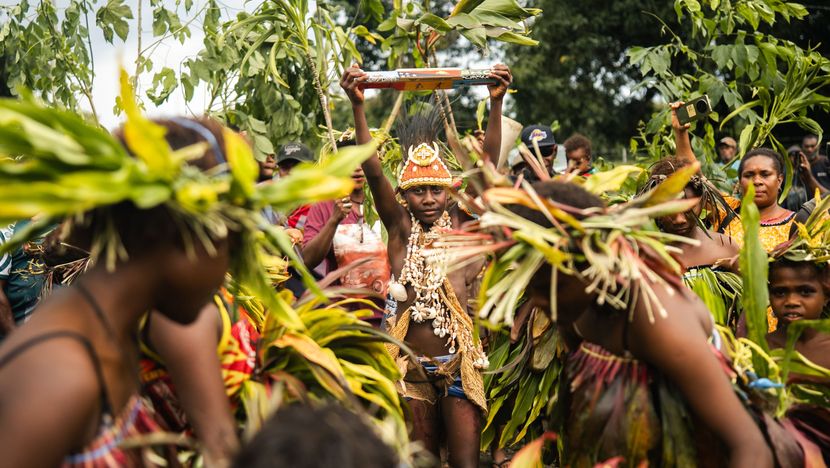
As the Papua New Guinea leg of the King’s Baton Relay drew to a close, the Baton was carried during a traditional Motu Koitabu dance associated with the Hiri Hanenamo. The Hiri Hanenamo is a cultural pageant in which young women represent their villages in traditional attire. Its principles are rooted in the historic Hiri trading voyages, when Motu communities travelled by sea to trade clay pots for sago, journeys that depended on cooperation, leadership, timing and trust. The moment reflected how the Relay was welcomed through local tradition and cultural continuity.
Across the visit, Papua New Guinea’s King’s Baton Relay programme emphasised cultural storytelling, participation and environmental responsibility. As the Baton continued its journey through Oceania towards Glasgow 2026, the Papua New Guinea leg demonstrated how local identity, tradition and community action sit at the heart of the Relay, carrying a shared Commonwealth message into Games year.

