A Different Map of Commonwealth Strength
Naoero, the Pacific Island nation formerly known internationally as Nauru, has won 33 Commonwealth Games medals. Every one of them has come in weightlifting.
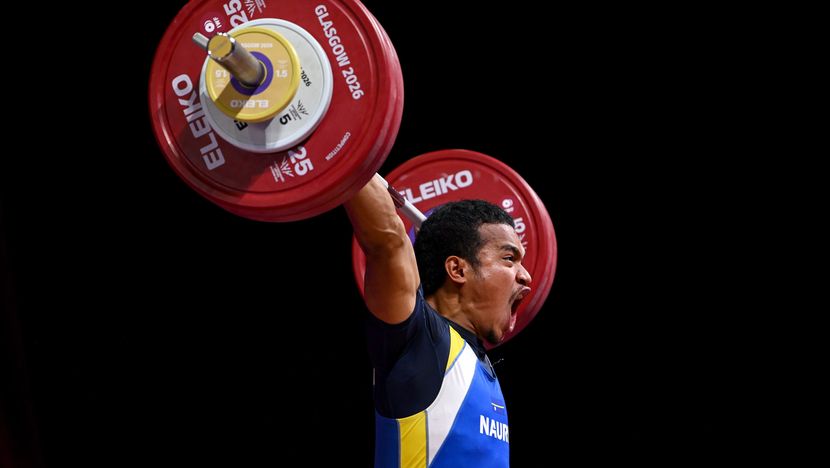
The latest two arrived at Glasgow 2026, where Ezekiel Moses took bronze in the men’s 71kg before 17-year-old Femily-Crystie Notte added another in the women’s 63kg. For one of the smallest countries in the Commonwealth, weightlifting has provided not simply a successful sport, but its entire Commonwealth Games medal history.
Naoero made its Commonwealth Games debut at Auckland 1990 and immediately won three weightlifting medals. In the years that followed, the island developed an increasingly sophisticated weightlifting programme and, at Manchester 2002, collected 15 medals in the sport at a single Games.
Naoero covers only around 22 square kilometres, but for a period in the late 1990s it reportedly had more weightlifters registered with the International Weightlifting Federation than China.
Much of that development was connected to coach Paul Coffa, who worked across the Pacific and helped establish the Oceania Weightlifting Institute. Marcus Stephen, who spearheaded Naoero’s early Commonwealth Games success and won three weightlifting golds in 1994, later served as the country’s President and described Coffa as the father figure of weightlifting in the Pacific.
What emerged was not simply one tiny island finding a sport it happened to be good at. Weightlifting developed a much wider foothold across the Pacific, creating opportunities for countries whose overall teams could never match the scale of the Commonwealth’s largest sporting nations.
Samoa won weightlifting medals at its first Commonwealth Games in 1974 and the sport has remained one of its most consistent routes to the podium. John Tafi continued that tradition in Glasgow with silver in the men’s 71kg, sharing the podium with Nigeria’s Edidiong Umoafia and Naoero’s Moses.
Papua New Guinea has developed its own history in the sport. Dika Toua became the first woman to compete in weightlifting at an Olympic Games at Sydney 2000 and went on to win Commonwealth gold in Glasgow in 2014, while athletes including Morea Baru have carried that tradition into another generation.
For nations such as Naoero, Samoa and Papua New Guinea, weightlifting has provided something larger than individual medals. It has given them a sustained place in an international sporting contest in which population and overall team size are not always reliable measures of strength.
Glasgow again showed how different that map can look. Malaysia emerged as the leading force in the men’s weightlifting programme, while Nigeria established itself across both the weightlifting and Para powerlifting platforms. Their success broadened the picture beyond the Pacific and showed that lifting has developed distinct centres of strength across the Commonwealth.
Nigeria’s performance was particularly significant because it extended across both disciplines.
Para powerlifting opened Glasgow 2026 and Nigeria immediately established itself at the centre of the competition. Esther Nworgu and Esther Oyema took gold and silver in the women’s lightweight event, while Folashade Oluwafemiayo broke the +86kg world record twice on her way to heavyweight gold. Team-mate Rita Ferdinand also set a world record in her bodyweight category and took silver.
Nigeria ultimately won three of the four Para powerlifting titles and six medals from the four events. Combined with its weightlifting results, it became one of the clearest examples in Glasgow of how heavily a nation can influence the lifting programme.
The competition around it remained exceptionally tight. In the men’s lightweight event, England’s Mark Swan and Nigeria’s Roland Ezuruike finished level on points and were separated only when their scores were taken to two decimal places, with Malaysia’s Bonnie Bunyau Gustin just behind them.
There was also a direct Commonwealth connection behind some of Nigeria’s success. Nworgu, Oyema and Ferdinand had all attended Commonwealth Sport GAPS camps, with Nworgu and Ferdinand taking part in the pre-Games camp in Ayr. Oluwafemiayo had also previously been involved in the programme, which gives Para athletes and coaches access to training, competition and development opportunities.
At Glasgow, those athletes competed within the largest integrated Para sport programme in Commonwealth Games history, with 47 Para medal events across six sports. Weightlifting and Para powerlifting were separate competitions, but together they offered one of the clearest examples of how differently sporting strength can be distributed across the Commonwealth.
Naoero remains the most striking example. A country of around 12,000 people has built its entire Commonwealth Games medal history around a barbell. Samoa and Papua New Guinea have established traditions stretching across generations, while Malaysia and Nigeria have become major forces in their own right.
Para powerlifting adds another dimension, with Nigeria producing world-record performances in Glasgow and Commonwealth initiatives such as GAPS helping widen access to high-level training and competition.
That is what makes the two lifting disciplines distinctive within the Games. They create space for a group of Commonwealth nations to compete from positions of genuine strength, producing a sporting order that looks markedly different from the wider medal table.
